
By Rev. Rodrigo Cruz, Executive Assistant to the Bishop, Georgia Conference
November 1st of 2006 was my first day of employment in a United Methodist Church. A couple of months before that, my parents dropped myself, my wife Kelly, and our only kid at the time RJ (6 months old) at the border of McAllen, Texas as we moved to the United States following God’s call for our lives. We had no idea what the United Methodist Church really was, or that a future life in the North Georgia conference would eventually exist.
During these past 20 years we have seen and experienced the United Methodist church at its best, and yet we have seen and experienced the graces and growing edges of the United Methodist Church. We have been embraced, cared for, and loved by members of congregations and colleagues across the connection; yet we have also lived with the reality of isolation, oppression and exploitation that minorities have experienced and continue to experience in our system.
If I were to summarize in one word the idea of trying to respond to God’s calling for our lives as a family in a foreign country, without family and in an unknown denomination, I would probably use a saying that I grew up with and goes like this: “estuvo bien canijo”, which translates it was as tough as you can get.
Yet, my greatest understanding of God’s grace throughout the past 20 years, didn’t come through my seminary education, through the ordination process, or even through doctoral studies or any other training. My greatest understanding of God’s grace still came through the brokenness of our United Methodist Connectional System and at the core of what United Methodist congregations are built with.
You see, we went through pregnancy without health insurance, traveling for schooling for over five years, fight with cancer, multiple adoption journeys, the hardships of church planting, life-threatening accidents, and many more challenges…. But we went through all these things literally being carried by clergy from within the connection and laity from within our churches.
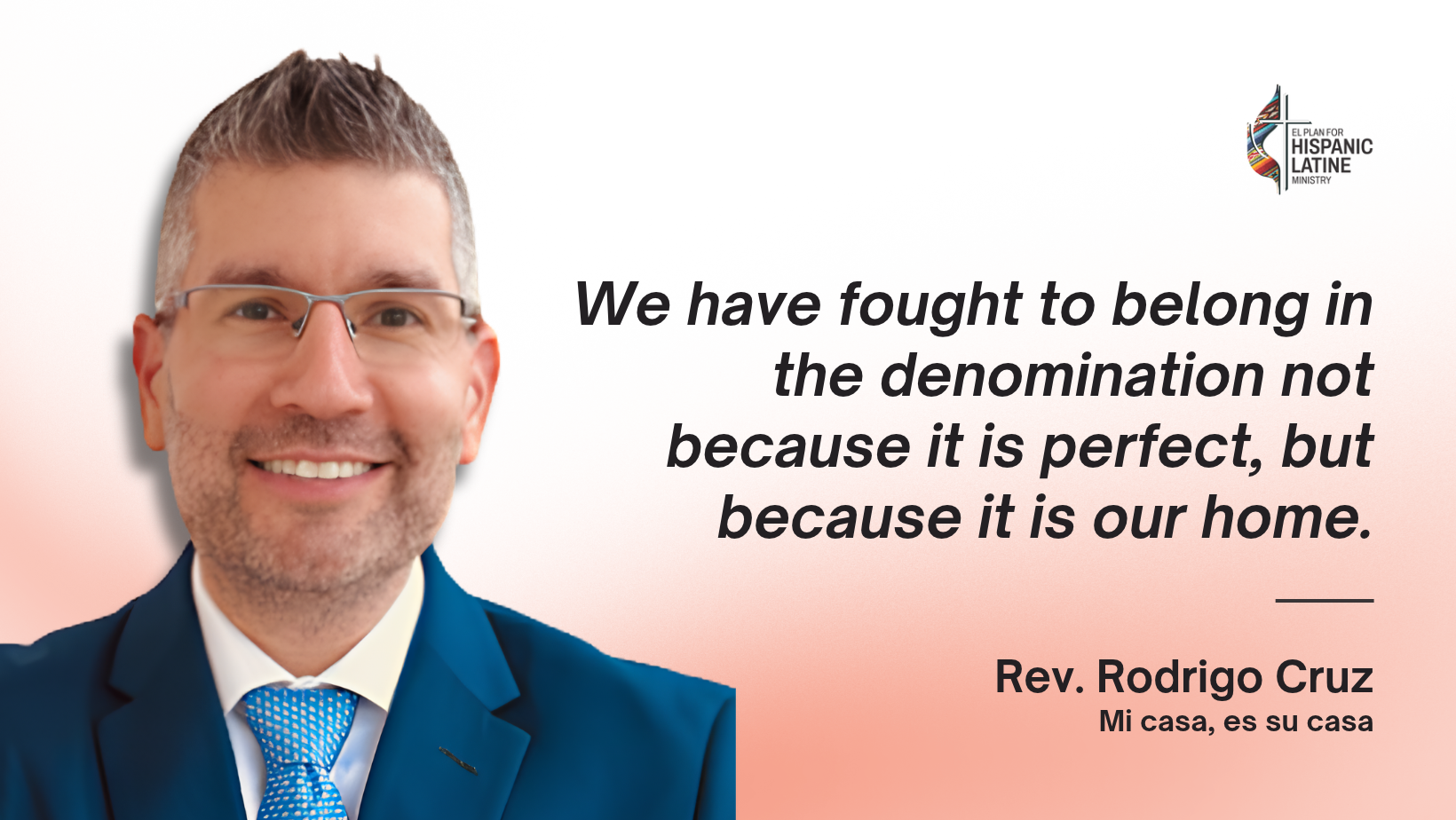
That is why as a family we are United Methodist to our core. This is why we have fought to belong and will continue to fight to live out our calling in this denomination. Not because it is perfect or has a perfect system, not because it has it all figured it out, but because at the end of the day, the United Methodist Church is our home, it’s our casa. (And the fact that the United Methodist church has a pretty dope Wesleyan theology doesn’t hurt 😉).
So, as I reflect on the past 20 years in this country and in this beautiful church, the question that God continues to put in my heart, is not “what will the next 20 years bring”, but “what can I do for someone else’s first 20 years?”
The idea that someone else is going or could be going through isolation, discrimination, persecution, tokenism and/or many more hardships without a community breaks my heart. The idea that I could do something about it and just standing on the sideline makes me crazy. And the possibility of us not doing with grace what has been done to us by grace I am sure breaks God’s heart.
So I would like to challenge all of us, to proactively look across our communities, churches, and annual conferences, to identify someone that God might be calling you to show them: “mi casa, es su casa”, and then go and by any means necessary give them heaven.